About This Venue
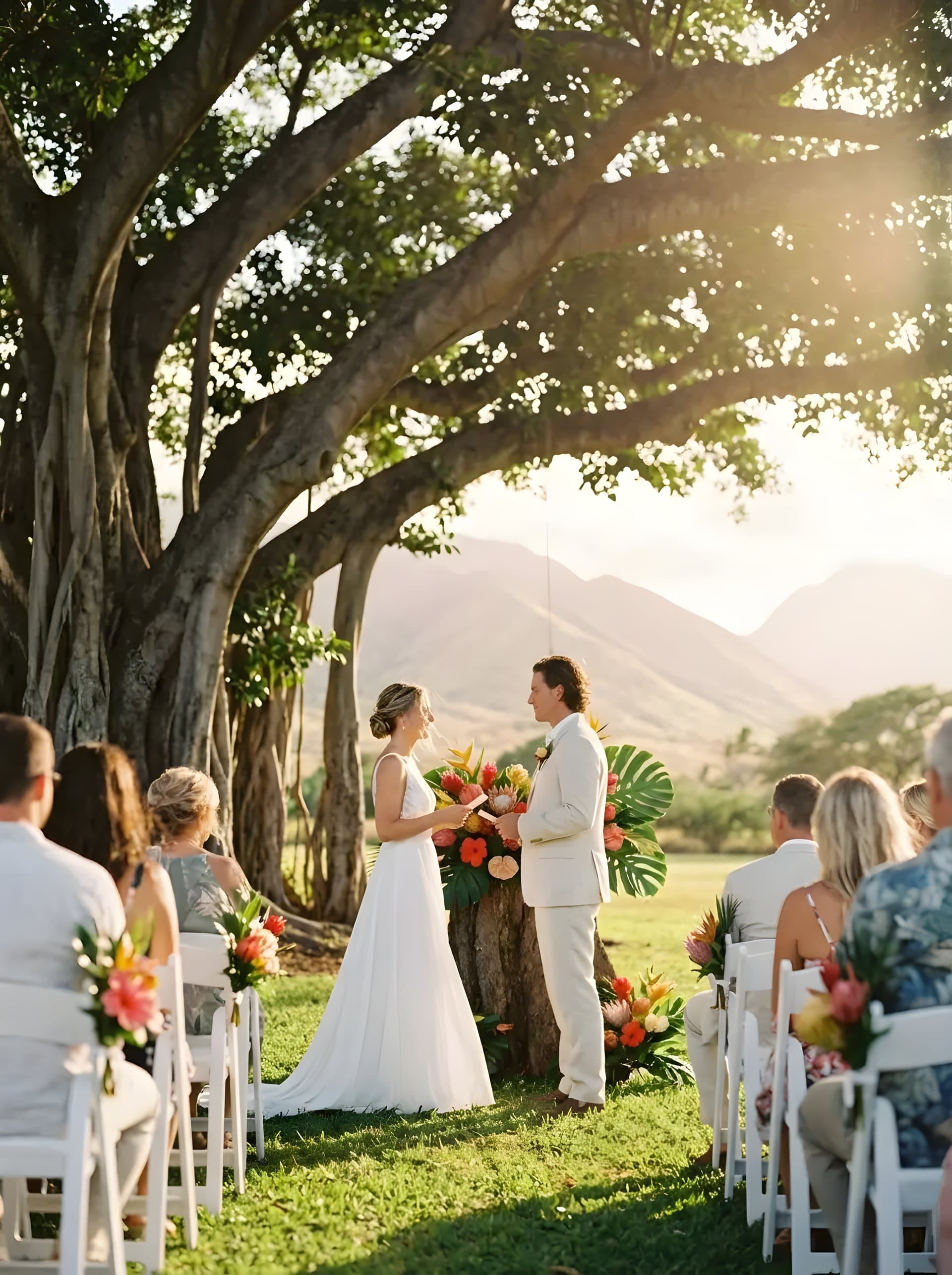
The Olowalu Plantation House sits along Honoapiilani Highway between Lahaina and Maalaea, on an estate that dates back to Maui's sugar plantation days. The Great Lawn is big and naturally shaded by coconut palms and century-old banyan trees. The West Maui Mountains are the backdrop. The plantation house has covered lanai space for cocktail hours, and the gardens around it are full of hibiscus, bird of paradise, and ginger. When the sun drops behind the mountains and tiki torches come on, the whole property shifts. It is a good venue for couples who want to be outside all evening without it feeling too casual.
Features & Amenities
Historic plantation estate with mountain-to-ocean views
Expansive Great Lawn beneath coconut palms and banyans
Covered lanai for cocktail hours and indoor backup
Lush tropical gardens with native Hawaiian plants
Tiki torch-lit evening ambiance
Ample on-site parking for large guest counts
The Olowalu Plantation House and Its Place on Maui
Olowalu is a small community on the west side of Maui, about halfway between Lahaina and Maalaea along Honoapiilani Highway. It is not a town with shops and restaurants. It is a stretch of coast where the mountains come close to the ocean and the land between them is flat, green, and mostly undeveloped. Sugar cane grew here for over a century. The plantation house is one of the remaining structures from that era, restored and turned into a private event estate.
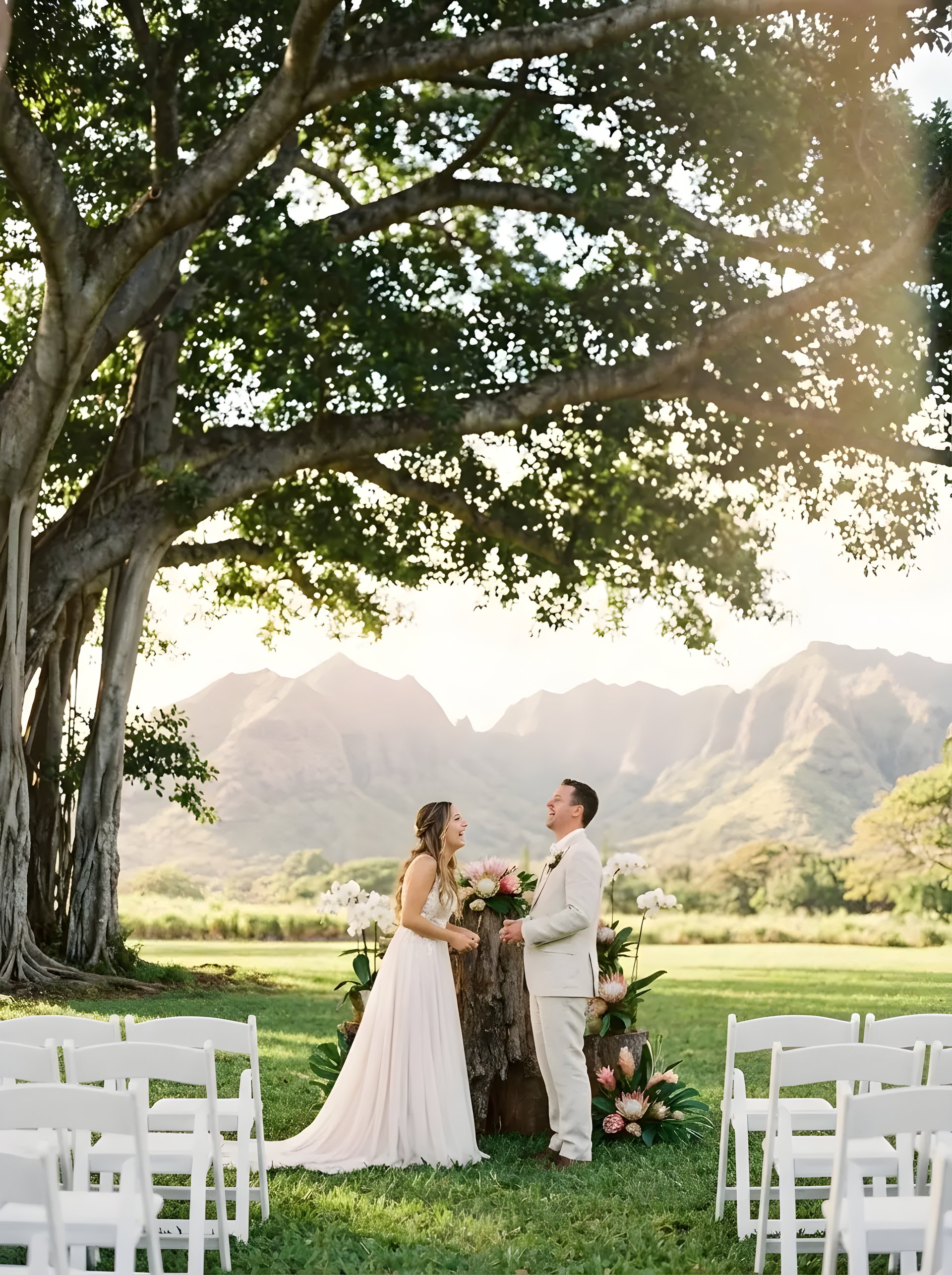
The property sits back from the highway, screened by trees. Once you pull through the gate, the road noise fades and you are on a different kind of Maui than the resort strips. The Great Lawn spreads out in front of the house, wide enough for 200 chairs with room to spare. Coconut palms are scattered across it, tall enough that their fronds barely move in anything less than a strong wind. Century-old banyan trees provide canopy cover over sections of the lawn. Behind everything, the West Maui Mountains rise steep and green, ridged with valleys that catch clouds and run with waterfalls after a rain.
In front, past the lawn and the coastal road, the ocean. The water off Olowalu is shallow and calm, protected by a fringing reef. The reef itself is one of the oldest and most extensive on Maui, home to green sea turtles that feed in the shallows. The views from the lawn take in the ocean, the island of Lanai across the channel, and on clear evenings, sunsets that light up the clouds above Lanai's ridgeline in orange and purple.
The Great Lawn and Ceremony Setup
The Great Lawn is the main event space. It is large. Really large. You can set up a ceremony at one end with an aisle running between the palm trees, a separate cocktail area on the side near the house, and a full dinner reception under the banyans, all without any of the spaces crowding each other. For weddings of 100 to 200 guests, that room to spread out is valuable. It means guests are not elbow-to-elbow at every moment, and kids have space to run around during the reception without crashing into the dance floor.
Most ceremonies face the ocean, with the couple standing at the far end of the lawn and guests looking past them toward the water. The palm trees create natural columns on either side of the aisle. Some couples add a simple wooden arch or chuppah. Others skip it entirely because the trees and mountains are enough.
The lawn is real grass, which means it is soft underfoot and photographs well, but it also means heels sink in. Flat shoes, wedges, or barefoot are the practical choices. The grass is maintained and level, so tables and chairs sit straight without wobbling, which is not always the case at outdoor venues.
The Plantation House and Lanai
The plantation house itself is a restored wooden structure with a wide covered lanai that wraps around the front. The lanai is where most couples hold their cocktail hour. Guests step up onto the porch, grab a drink from the bar, and look out over the lawn while the ceremony space gets turned into the reception setup. The covered space also works as a rain backup, though it is not large enough to hold a full dinner for 200. For smaller weddings, the lanai can be the primary reception space.
Inside the house, there are getting-ready rooms for the wedding party. Having an on-site space to dress and prepare means no one is driving across the island in their gown and hoping traffic cooperates. Hair and makeup can set up in the house in the morning, the couple gets ready on-site, and the ceremony is a short walk out the door.
Catering, Vendors, and Flexibility
Unlike resort venues, Olowalu Plantation House does not have an in-house kitchen or catering team. You bring in your own caterer, your own bar service, your own rentals. For some couples, this is a constraint. For others, it is the main advantage. It means you pick the caterer you want, whether that is a chef who specializes in Hawaiian plate lunch scaled up to wedding quality, a farm-to-table operation sourcing from Kula and upcountry, or a caterer who does traditional sit-down multi-course dinners.
The same flexibility applies to the bar. You can hire a mobile bar service, set up a self-serve wine and beer station, or bring in a full bartending team with craft cocktails. We work with caterers and bar services across the island and can match you with the right fit based on your menu vision and budget. Our local Maui catering page has detail on how we approach food and beverage for events at venues like Olowalu.
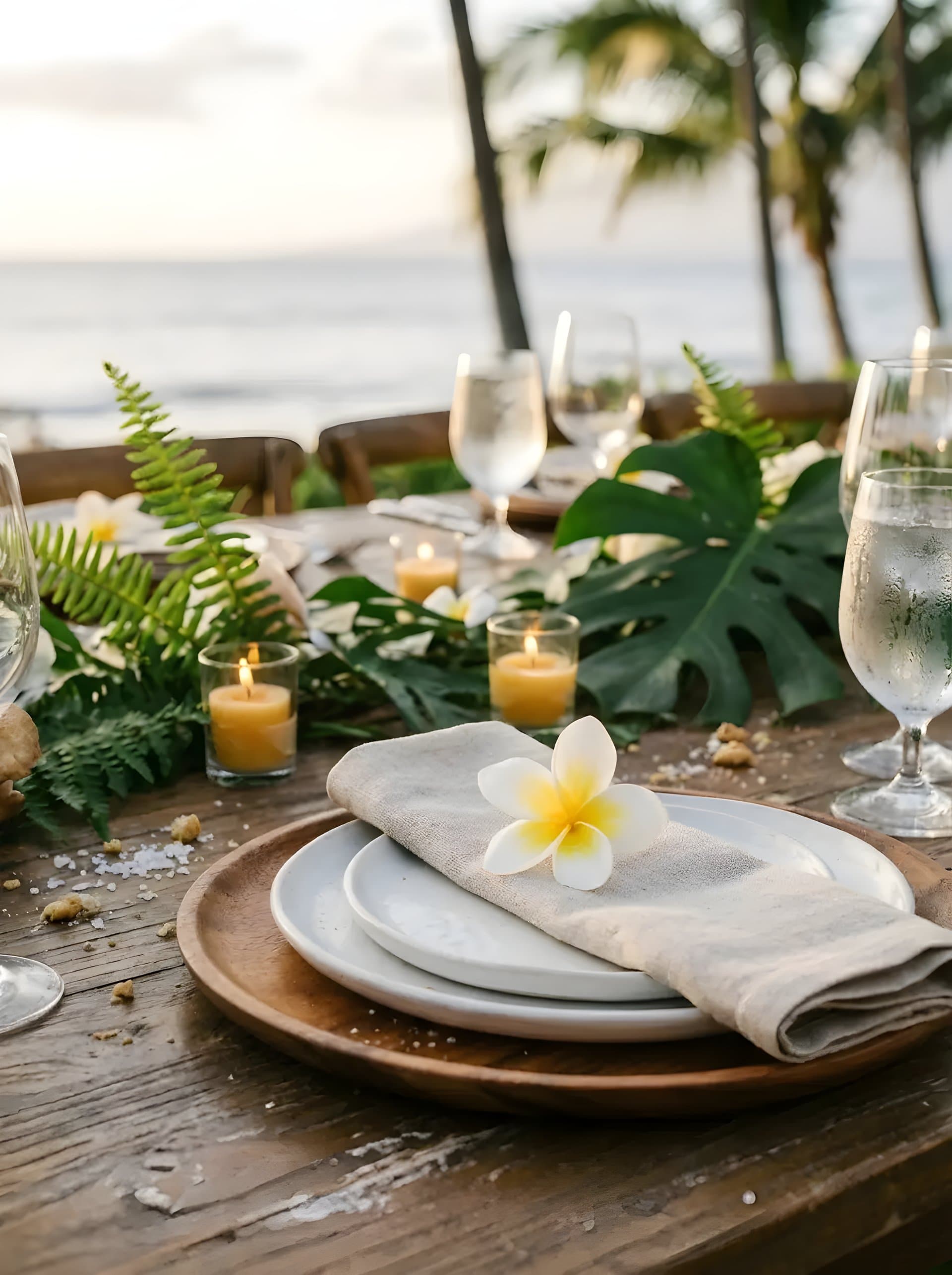
Rental companies provide tables, chairs, linens, glassware, flatware, and everything else you need. Tents are available if you want overhead cover for the dinner area, though most couples at Olowalu go without and dine under the open sky. A tent for 150 guests runs $2,000 to $4,000 depending on style and lighting.
The Evening Transition and Tiki Torches
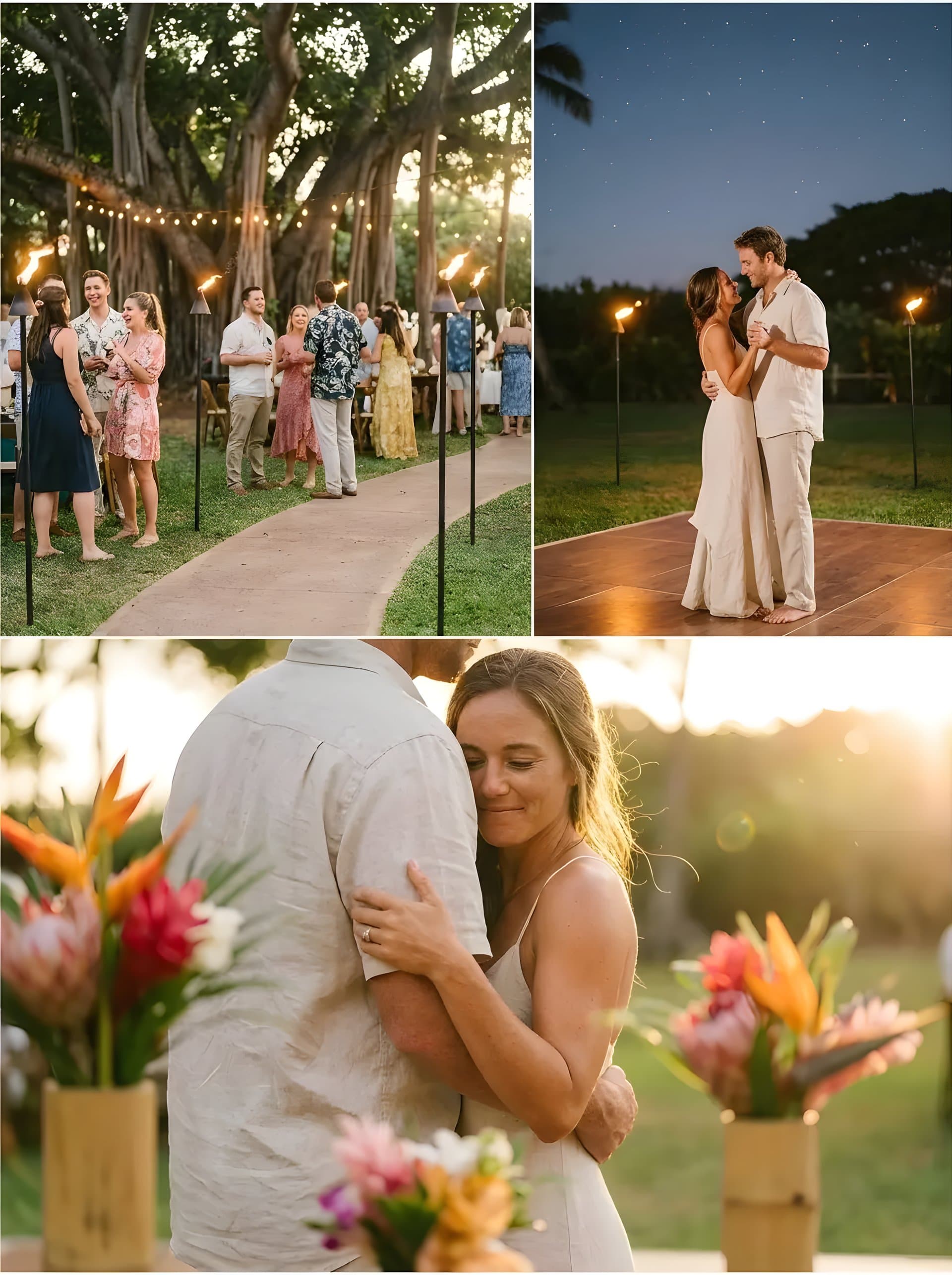
Olowalu is one of those venues that gets better as the night goes on. During the day, it is a pretty property with good views. During sunset, the mountains and sky put on a show. But after dark, when the tiki torches are lit and the string lights come on overhead and the palm fronds are silhouetted against the stars, the whole atmosphere shifts. It feels like old Hawaii. The kind of evening that people who live here still get excited about.
The tiki torch layout is something we coordinate with the venue. Torches line the pathways, the perimeter of the lawn, and the ceremony aisle if it is being reused for the reception entrance. They provide warm, flickering light that is far more interesting than a bank of event spotlights. Some couples add fire performers, traditional Hawaiian fire knife dancers, as part of the evening entertainment. The open lawn gives them room to perform safely, and the dark backdrop makes the fire dance look incredible.
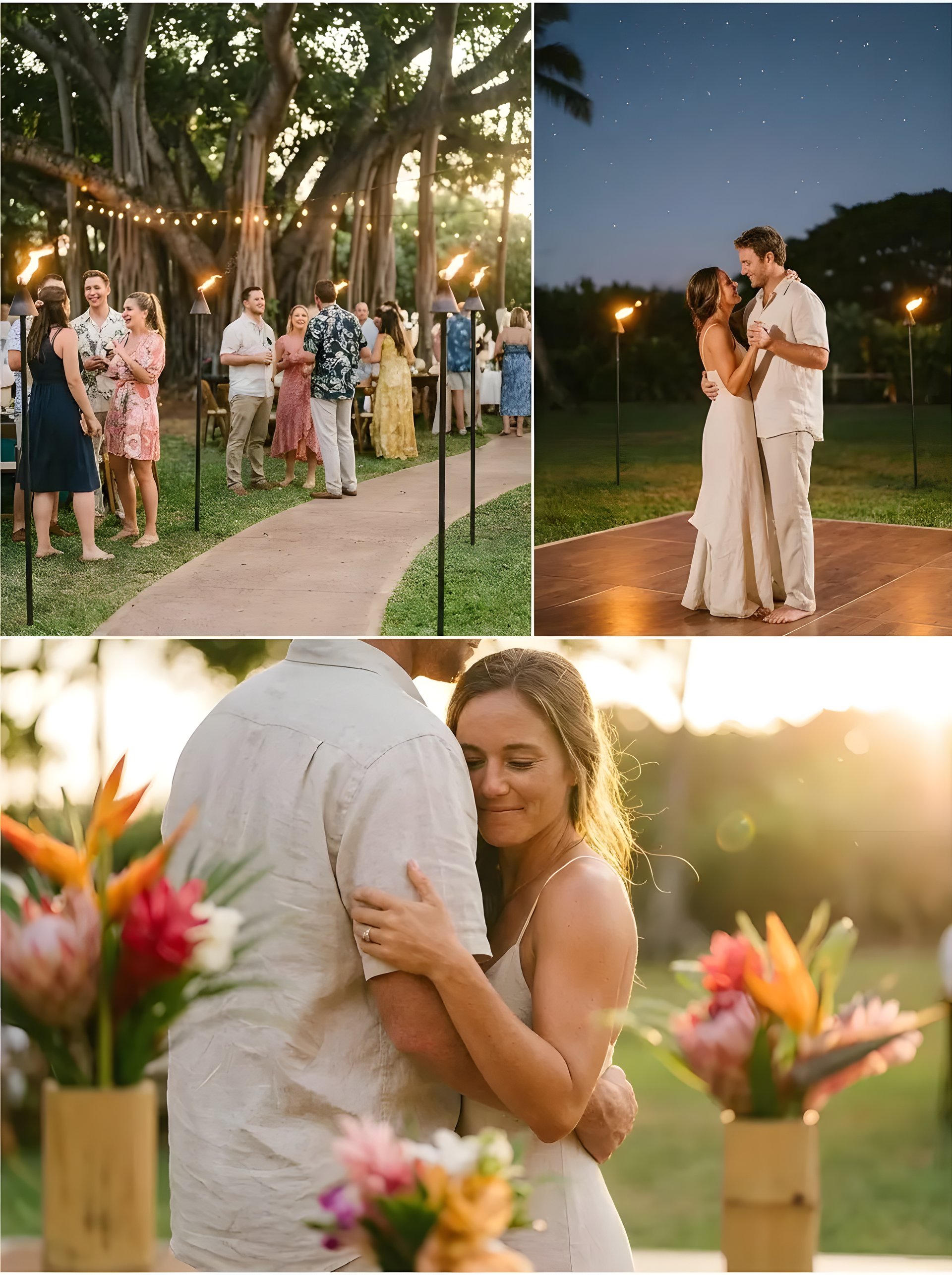
Pair that with live Hawaiian music, a slack-key guitarist or ukulele trio during dinner, and you have an evening that feels rooted in the place rather than generic.
Location, Access, and Practical Notes
Olowalu is about 15 minutes south of Lahaina and 25 minutes north of Kihei. It is roughly equidistant from the two main tourist corridors on the west and south sides of the island. Guests coming from either direction have a short, easy drive on Honoapiilani Highway. The venue has a parking lot that handles large guest counts, which is a real advantage over beach venues and some restaurant locations where parking is tight.
One thing to know: the highway runs close to the property. During the ceremony and dinner, you can occasionally hear traffic. It is not loud, and most people stop noticing after a few minutes, especially once the music starts. But it is there. The ocean side of the property is quieter, so positioning the ceremony facing the water helps.
Mosquitoes are the other practical consideration. Olowalu's low elevation, proximity to water, and lush vegetation mean mosquitoes are present at dusk. This is standard for outdoor West Maui venues at low elevation. Citronella torches (which double as tiki torches) help, and we recommend providing bug spray stations at the cocktail area. It is a small detail that makes a real difference in guest comfort.
Who Olowalu Plantation House Is Right For
Olowalu is the venue for couples who want a large outdoor wedding on real Hawaiian land. Not a resort lawn. Not a restaurant. A plantation estate with old trees, mountain views, ocean views, and enough space that the event can breathe. It handles 40 to 200 guests comfortably and gives you full control over catering, bar, music, and styling.
It is a strong fit for couples who have a specific vision for their vendors and do not want to be locked into a resort's in-house team. It is also one of the better values among Maui's mid-to-large capacity venues. The venue fee is lower than resorts, and you allocate the savings toward the caterer, florist, and entertainment of your choice.
To see how a wedding at Olowalu comes together, take a look at Lisa and Christopher's Olowalu celebration in our portfolio. And if you want to start planning, we are happy to walk the property with you and talk through layouts, vendor options, and timeline. The first conversation is always free.
Gallery

The right venue changes everything. We have walked every one of these spaces and know which one fits your day.
150+
Maui Weddings
5.0
Client Rating
8+
Years on Island
100%
On-Time Execution
“We wanted something intimate and real. MOM gave us exactly that — no cookie-cutter packages, just a wedding that felt like us.”
Emma & James
Kapalua Bay
Love This Venue?
Tell us a little about your wedding and we'll help you check availability and plan the perfect day here.