Back to Blog
Event11 min read
Hawaiian Wedding Traditions: What They Mean and How to Include Them
Married on Maui
April 18, 2024
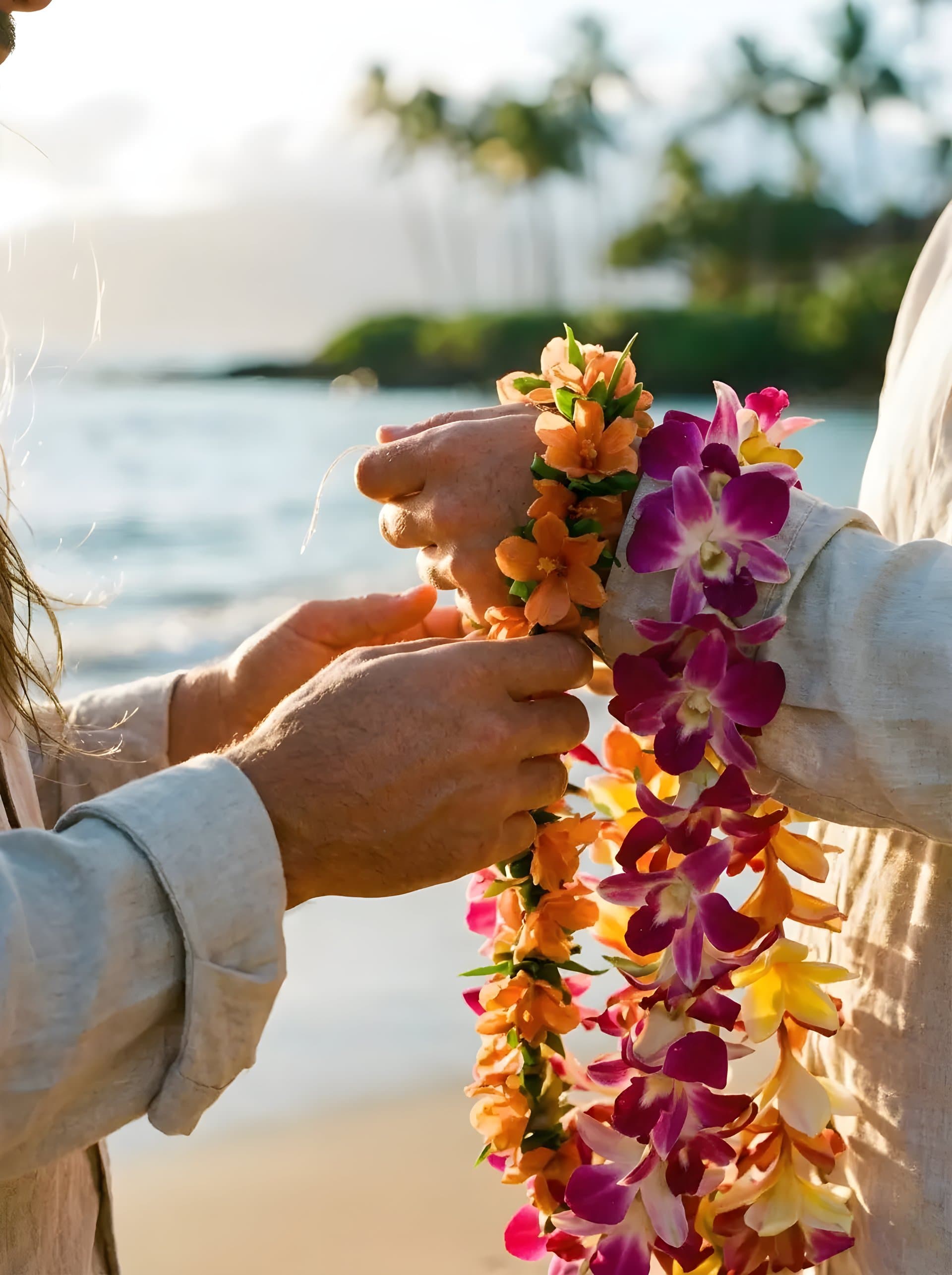
Getting married on Maui means you are standing on land with a deep cultural history. Hawaiian wedding traditions are not decorative touches — they are living practices with real meaning, rooted in a worldview that centers connection, family, and the relationship between people and place. Including them in your ceremony can be one of the most moving parts of the day. But it needs to be done with understanding, not just aesthetics.
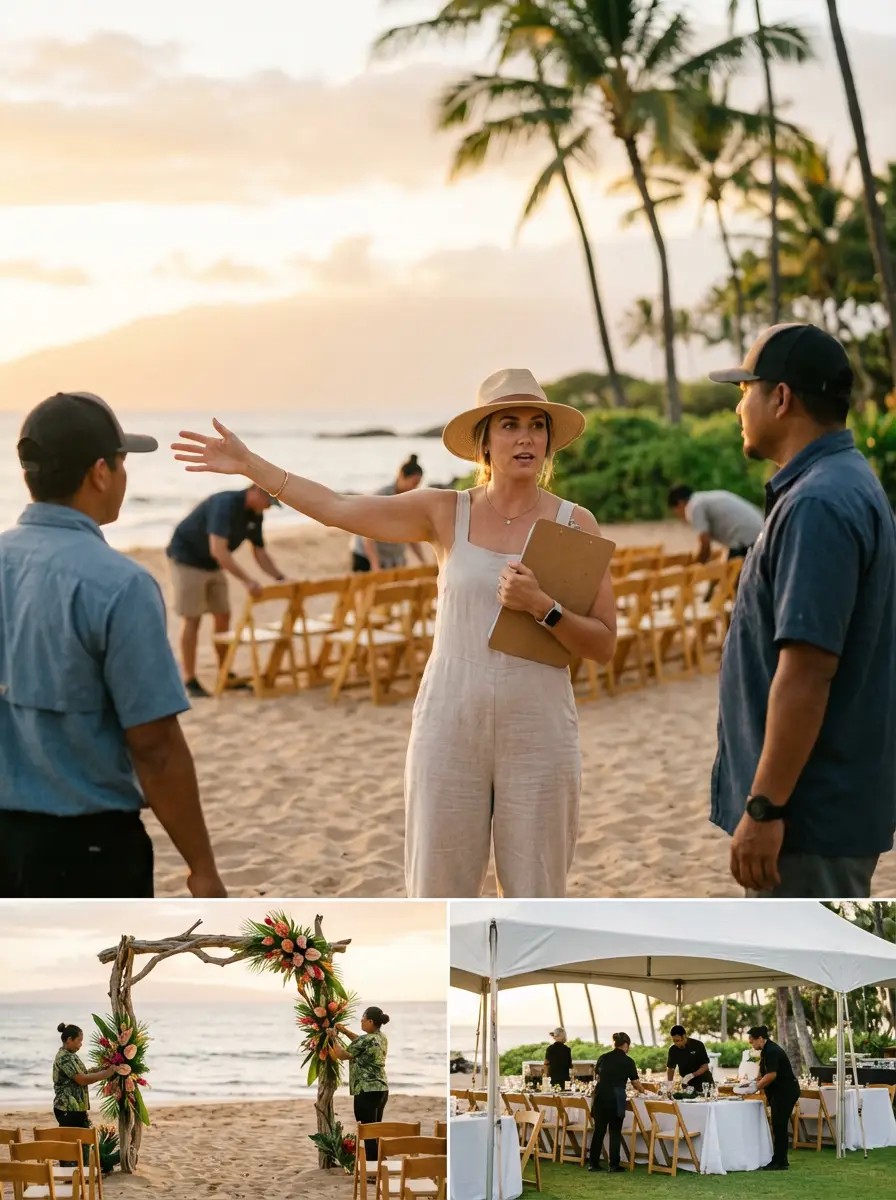
We work with Hawaiian officiants and cultural practitioners who can guide you through each tradition properly. Below is what each one means and how it fits into a modern Maui wedding.
The Lei Exchange
The lei exchange is the most recognizable Hawaiian wedding tradition, and it is beautiful in its simplicity. During the ceremony, each partner places a lei around the other's neck. The lei represents love, respect, and the joining of two lives.
What it means
In Hawaiian culture, the lei is far more than a garland of flowers. It is a physical expression of aloha — of love given freely. When you place a lei on someone, you are offering a piece of yourself. The circle of the lei has no beginning and no end, which is why it represents eternal connection.
How to include it
- The couple exchanges leis during the ceremony, usually after the vows and before the rings
- The bride traditionally receives a lei of white orchids, pikake (jasmine), or tuberose
- The groom traditionally receives a lei of maile leaves, ti leaves, or kukui nuts
- Parents and family members can also be honored with leis — this is a beautiful way to include them in the ceremony
- Your officiant can explain the significance as the exchange happens
Cost: $25 to $150 per lei depending on the flowers. Maile lei for the groom typically runs $40 to $80.
The Blowing of the Pu (Conch Shell)
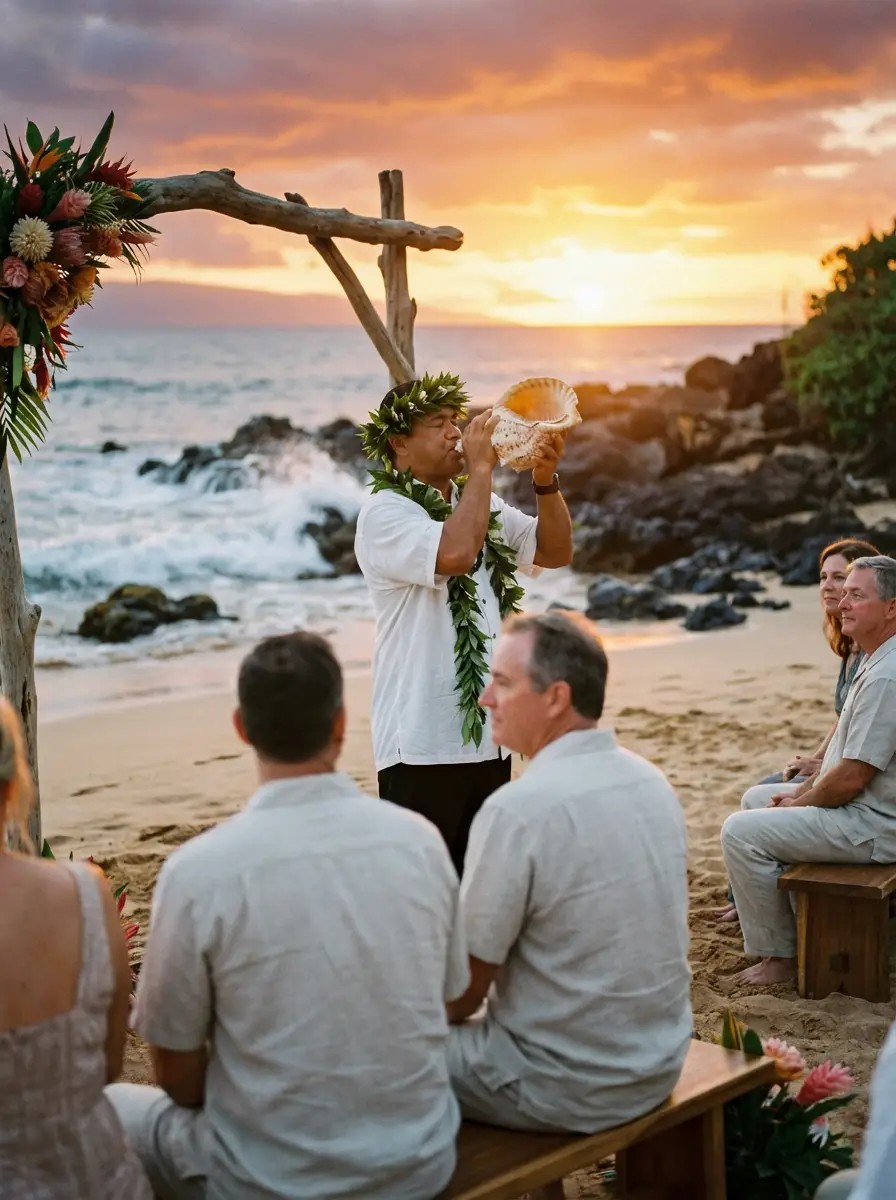
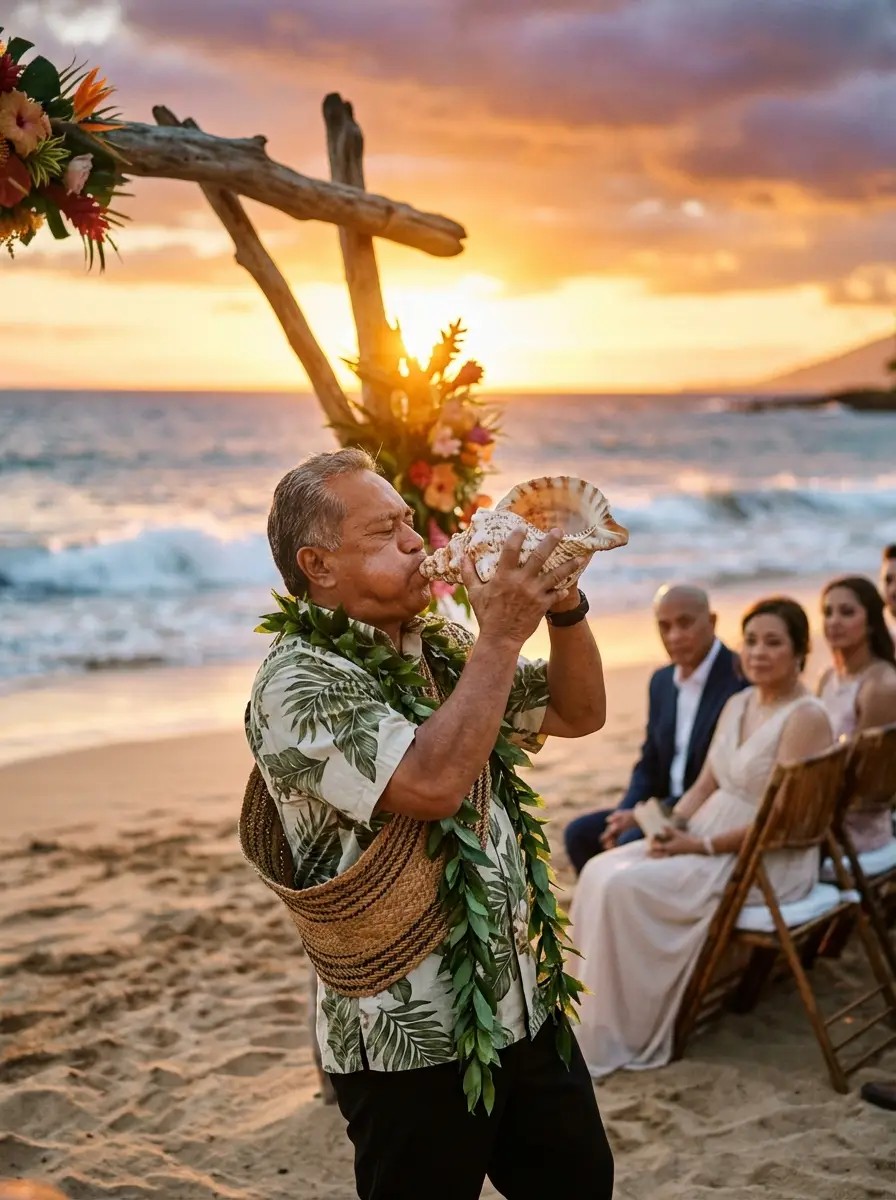
The ceremony opens with the deep, resonant sound of a conch shell — the pu — blown by the officiant or a designated elder. The sound carries across the landscape, and there is something about hearing it on a beach at sunset that stops everyone in their tracks.
What it means
The blowing of the pu announces a significant event. In ancient Hawaii, it called communities together for important gatherings. At a wedding, it signals the beginning of a sacred ceremony, clears the space of negative energy, and calls the attention of the gods and ancestors. It is both a greeting and a blessing.
How to include it
- Your Hawaiian officiant blows the pu at the very start of the ceremony, before the processional or opening words
- It can also be blown at the end of the ceremony to celebrate the union
- Some couples have a family member blow the pu as a way to honor a Hawaiian connection
The Pule (Hawaiian Blessing)
A pule is a Hawaiian prayer or blessing, spoken in 'olelo Hawai'i (Hawaiian language) at the opening and sometimes closing of the ceremony. It sets the spiritual tone for the entire event.
What it means
The pule invokes the blessing of ke Akua (God or the divine) and the 'aumakua (ancestral spirits) over the couple and their union. It acknowledges the land, the ocean, and the natural world as witnesses to the marriage. A well-spoken pule connects the couple to something larger than themselves and roots the ceremony in the place where it is happening.
How to include it
- Your Hawaiian officiant offers the pule in Hawaiian, often with an English translation or explanation for guests
- The pule is typically spoken at the opening of the ceremony and sometimes again at the close
- Guests are usually asked to bow their heads or close their eyes during the blessing
The Honi (Sharing of Breath)
Instead of or in addition to the first kiss, the couple presses their foreheads together and shares a breath. This is the honi — and it is one of the most intimate moments in a Hawaiian ceremony.
What it means
The honi is the traditional Hawaiian greeting. Pressing foreheads together and sharing breath (ha) is an exchange of mana — spiritual energy, life force. In the context of a wedding, it symbolizes two souls becoming one. The breath shared between you in that moment is sacred. It is quiet, still, and deeply personal.
How to include it
- The officiant guides the couple to press their foreheads together and breathe
- The moment usually lasts 5 to 10 seconds — long enough to feel it, short enough to stay intimate
- Some couples do the honi instead of a kiss, others do both
- Your officiant will explain the significance to your guests so they understand what they are witnessing
The honi is often the moment guests remember most. It is quieter and more vulnerable than a kiss, and that contrast — in a world of Instagram-ready gestures — is what makes it powerful.
The Sand Ceremony
The sand ceremony is not exclusively Hawaiian, but it has special resonance on Maui because the sand you use comes from the very beach where you are standing. Each partner pours a different color of sand into a shared vessel, creating a layered pattern that cannot be separated.
What it means
The merging of sands represents the joining of two lives, two families, or two cultures into something new and inseparable. Once the sands are blended, they cannot be pulled apart — just as a marriage intertwines two lives permanently.
How to include it
- Each partner has a vessel of colored sand (or local beach sand in its natural shades)
- They pour their sand simultaneously or alternately into a shared container
- Children from previous relationships can also pour their own sand as a symbol of family blending
- The vessel is kept as a keepsake — displayed in your home as a physical reminder of the ceremony
The Lava Rock Ceremony
Less widely known but deeply meaningful. The couple places a lava rock together at the ceremony site as an offering to the land. In Hawaiian belief, lava rock carries the mana of Pele, goddess of fire, and connecting it to a specific place is an act of grounding and gratitude.
How to include it
- Your officiant provides a lava rock (ethically sourced) and explains its significance
- The couple places it together at the base of the altar or ceremony space
- Some couples take a small, smooth lava stone home as a wedding keepsake
The Oli (Chant)
An oli is a Hawaiian chant — spoken, not sung — that can open or close a ceremony. It is performed by a trained practitioner and carries layers of meaning about the land, the couple, and the ancestors.
What it means
The oli connects the present moment to the long history of the place. It honors the 'aina (land), the kai (ocean), and the people who have stood on this ground before. Hearing an oli performed by someone who has trained in the tradition is an experience that goes beyond words — the rhythm and resonance of the Hawaiian language in open air is something guests never forget.
A Note on Respect and Authenticity
These traditions belong to Hawaiian culture. Including them in your wedding is a privilege, and it should be treated that way. Here is what we recommend:
- Work with a Hawaiian officiant or cultural practitioner — not someone who "read about" these traditions online
- Let the practitioner lead. They know the proper order, pronunciation, and context. Follow their guidance.
- Do not pick and choose elements for aesthetics alone. If you include the pu and the lei exchange, understand what they mean. Your guests will feel the difference.
- Ask questions. Good practitioners welcome genuine curiosity. They would rather you ask than assume.
- Tip your officiant generously. They are sharing their culture with you. That has value beyond the service fee.
The couples who include Hawaiian traditions with real understanding create ceremonies that feel completely different from a standard wedding. There is a weight and a stillness to those moments that stays with people long after the flowers have dried.
We Can Help You Get This Right
We work with several Hawaiian officiants and cultural practitioners on Maui who bring deep knowledge and genuine aloha to every ceremony. We will help you understand each tradition, choose the ones that resonate with you, and ensure they are performed with the care and respect they deserve.
Book your free consultation with Married on Maui and let's talk about building a ceremony that honors this place and your love story.
Hawaiian wedding traditionslei exchange ceremonyHawaiian culture weddingMaui ceremony traditionshoni wedding tradition