Back to Blog
Planning10 min read
Best Month to Get Married in Maui: A Season-by-Season Guide
Married on Maui
February 27, 2026

What most couples get wrong about Maui wedding timing
We hear a version of the same question constantly: "When should we get married on Maui?" And almost every couple who asks has already convinced themselves it has to be summer — peak season, warmest weather, longest days. Sometimes they're right. More often, they haven't considered what summer actually costs them in money, availability, and crowd stress.
The truth is Maui has four distinct wedding windows, and the best one depends on what you're actually trying to get out of the day. We've planned weddings in every month of the year on this island. Below is what we've learned, with real numbers on temperatures, rainfall, and sunset times so you can make a decision based on your priorities, not just assumptions.
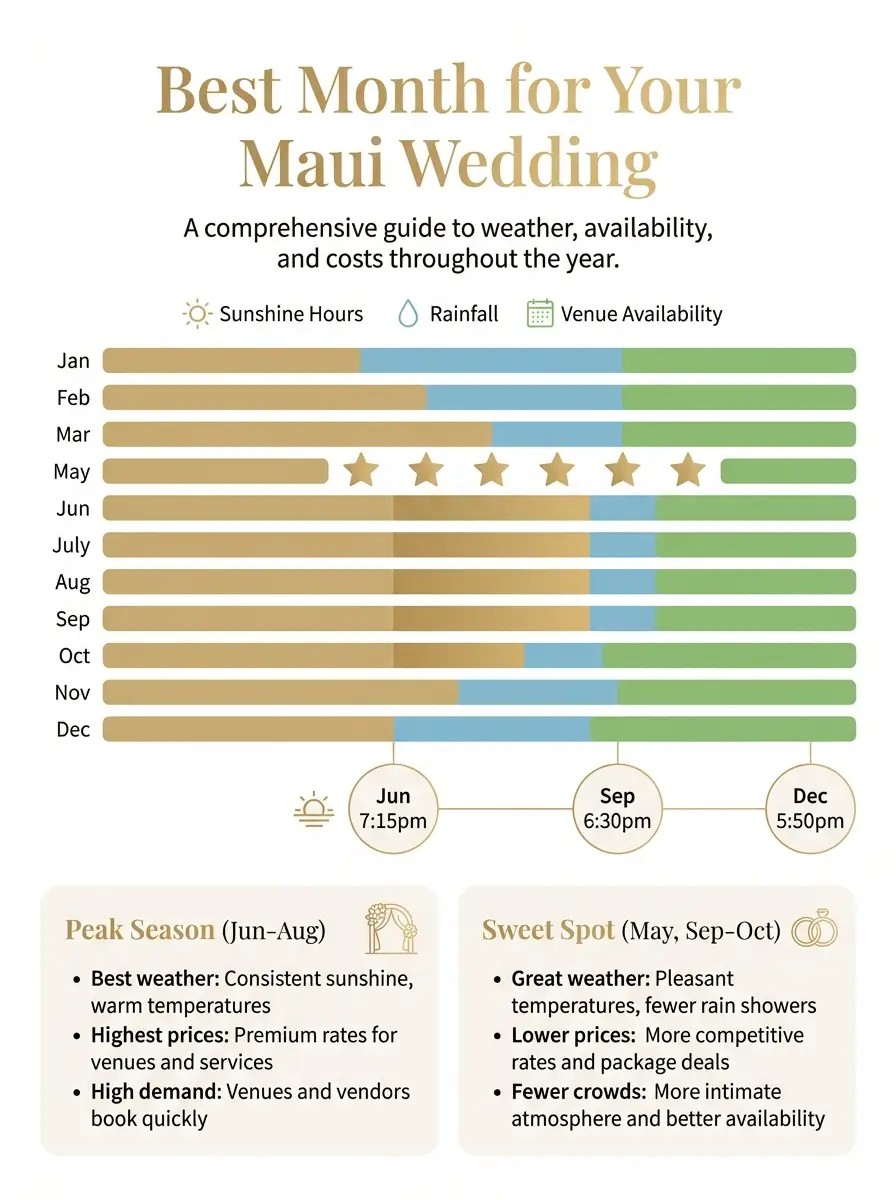
Peak season: June through August
The weather case for summer
June is the best weather month on Maui. Full stop. Rainfall averages 0.3 inches — barely measurable. Temperatures sit between 80 and 86°F with lower humidity than the rest of the year (55-60%). Sunset falls around 7:15pm, which gives you a natural ceremony-to-cocktail-hour arc that almost plans itself. July and August are nearly as good: 0.4 to 0.5 inches of rain on average, temperatures in the mid-to-upper 80s, long evenings.
The trade-offs
Peak season pricing is real. Hotels in Wailea run $250-$500+ per night in summer. Venues book 12-18 months ahead. Top photographers fill their calendars over a year out. If you decide in March that you want a July wedding, you'll be building a vendor list from whatever's left.
July and August also bring Maui's heaviest tourist crowds. Beaches are busier. Restaurants have waits. The island has a more rushed energy than it does in spring or fall.
If peak season is your window because of school calendars or family schedules, book everything at the 12-month mark. Not 11, not 10. Twelve.
The sweet spot: May and September-October
Why we keep recommending these months
If you ask us directly, May and September are our top picks for most couples.
May averages 1.0 inch of rain and temperatures in the mid-80s. Sunset is around 7pm. The summer crowds haven't arrived yet, which means venues have openings, hotel rates are 20-30% lower than July, and the island feels more relaxed.
September is its mirror image on the other side of summer. Kids are back in school, summer visitors have gone home. Temperatures are still warm (high 80s), rainfall is just 0.6 inches on average, and you can often book venues with six to nine months of lead time instead of twelve-plus.
Shoulder months: April and November
April: the underrated one
April doesn't get enough credit. Rainfall averages 1.5 inches, temperatures are in the low 80s, and sunset is around 6:45pm. It's the end of whale season — you might still spot humpbacks in early April — and the island is green from the winter rains but already drying out.
November: the trade-off month
November is where things start to shift. Rainfall climbs to 2.5 inches, sunset drops to 5:50pm, and Kona winds become more frequent. The first part of the month is usually fine. Thanksgiving week brings a price spike.
What is the cheapest time to get married in Maui?
January and February. Hotel rates are the lowest of the year outside of the first week of January. Vendor availability is wide open. The catch is rain: January averages 3.5 inches, February 2.8 inches.
February does have one thing going for it: peak whale season. We have photos from February weddings where you can see a whale breaching in the distance over the couple's shoulders.
Does it rain a lot during Maui weddings?
Maui rain is different from mainland rain. Most of it falls as brief tropical showers — 10 to 20 minutes, usually followed by sun and often a rainbow. It's rarely the grey, all-day overcast you'd get in Seattle or London.
The bigger variable is location. Maui has distinct microclimates shaped by Haleakala volcano.
South Maui (Wailea, Makena, Kihei)
The driest part of the island. Wailea gets roughly 10-15 inches of rain per year. If weather is your main concern, a south Maui venue gives you the best odds regardless of month.
West Maui (Ka'anapali, Lahaina, Kapalua)
15-25 inches per year. Protected by the West Maui Mountains from some storm systems. Still a solid option most of the year.
Upcountry and East Maui (Haiku, Hana)
Significantly wetter. Haiku Mill sits in a lush, green setting that exists precisely because it gets more rain. Just make sure your venue has a reliable indoor backup.
Trade winds and what they actually mean
Most days on Maui, the northeast trade winds blow 10-20 mph. They keep temperatures comfortable but also mean loose hair, veils, and lightweight table linens will move. If your ceremony includes candles, use hurricane lanterns.
What is the best month for a wedding in Maui?
Best weather, price is secondary: June or early July. Book 12-18 months ahead.
Best weather plus value: May or September. Book 6-12 months out.
Budget is the priority: January or February. Accept some rain risk, pick a south Maui venue.
You want whale watching: December through March. February is peak sighting season.
You have school-age guests: June, July, or August. Book everything early.
Our actual recommendation
For most couples, May is our first recommendation and September is our second. Both give you excellent weather without the peak-season price premium and booking stress of midsummer. The island is quieter. Your vendors are more available. The beaches aren't crowded. And the light is still beautiful.
That said, there's no wrong answer here. The month matters less than the planning.
Every month we've ever worked on Maui has produced a wedding that the couple would not trade for anything. The goal is making sure your specific priorities align with your specific month.
Ready to figure out your timing?
We offer a free initial consultation where we walk through your guest count, venue preferences, travel constraints, and budget — and map that to a realistic season and timeline.
Book your free consultation at marriedonmauillc.com and let's start with the date.
weatherseasonplanningbest month maui weddingmaui wedding season